by Tom | Jul 20, 2012 | Foundations, South Park Modern Bungalow
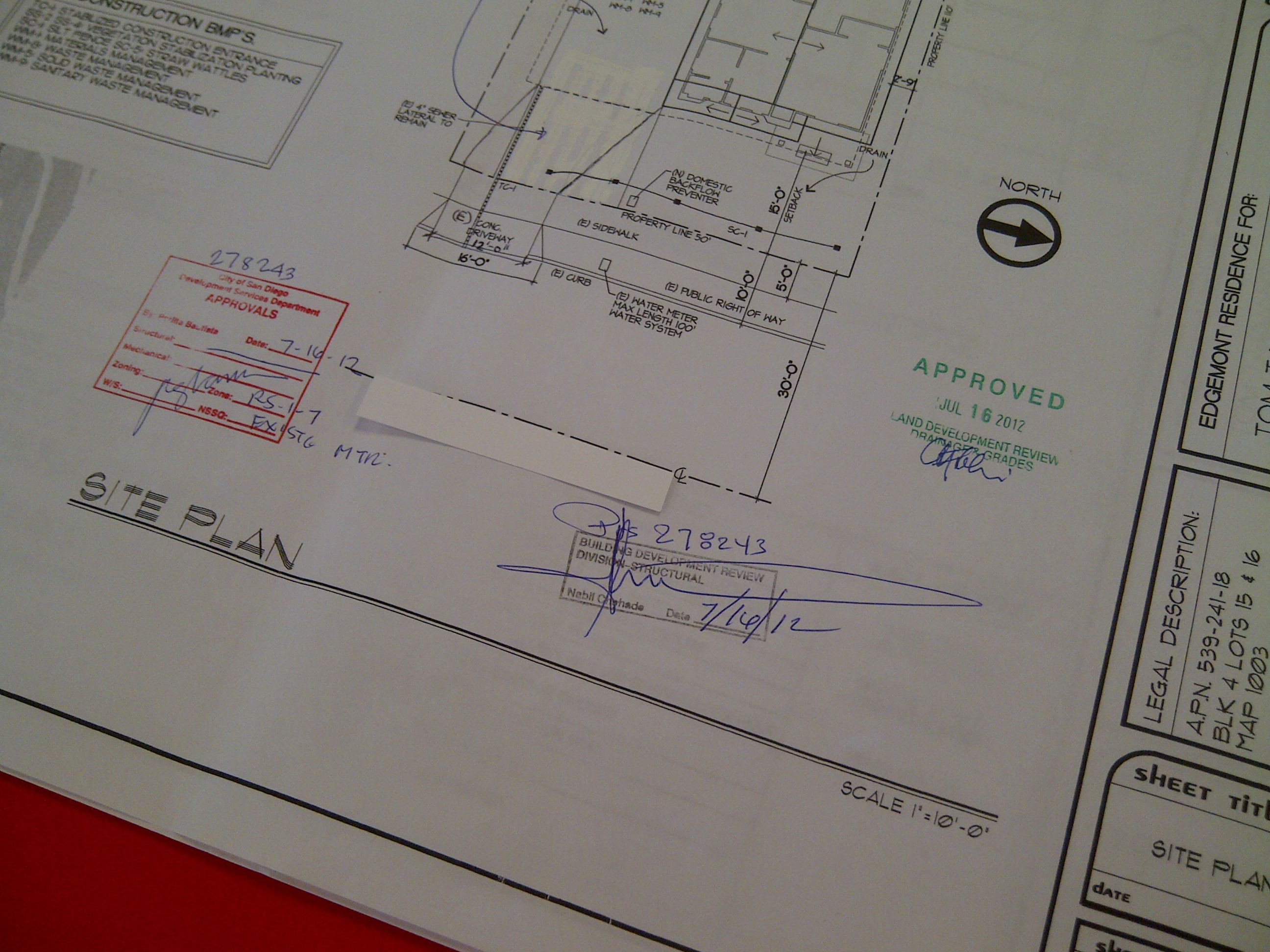
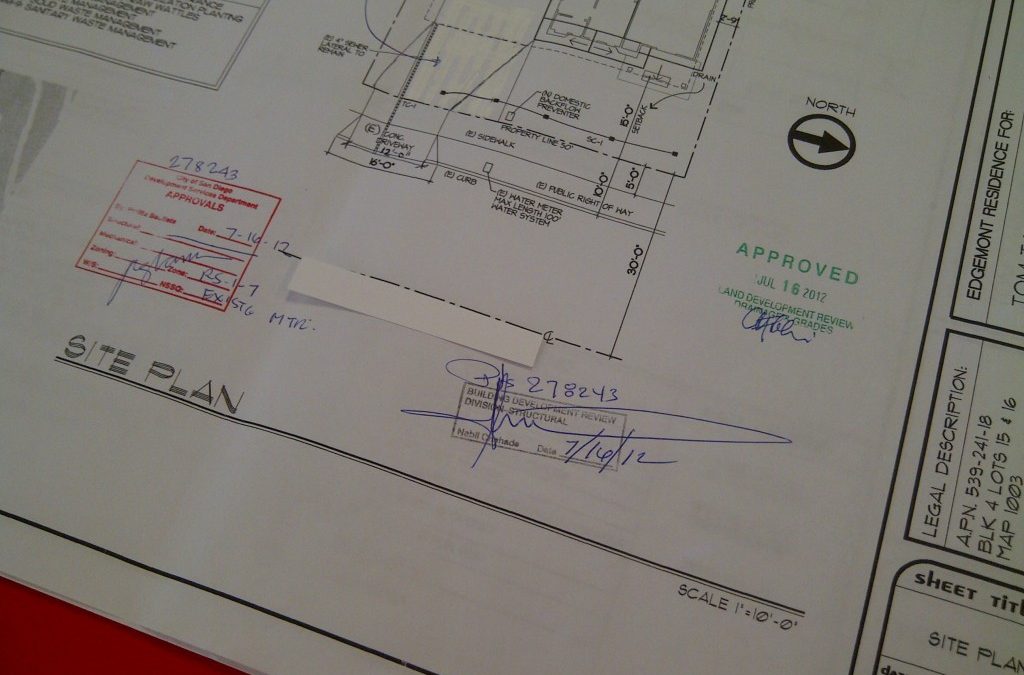
This Monday, July 16, I finally got approval stamps on my plans. As you might remember I had a huge setback and changed the whole house design around and had to start over. In this go round, it only took 2 rounds of changes on the new plans. I paid an extra $1500 bucks for the expedite plan check which guarantee’s a 8 business day turn-around. Had I not coughed up this extra fee it would take a month to get through the structural department because they are so backed up. There were a lot of minor changes to the plans that the City asked for, these requests are called “cycle issues.” Once you change your plans to reflect their instructions, then you go down and resubmit which means basically drop them off for another 8 business days. So I waited the first 8 days, changed them once and dropped them back off, waited another 8 business days and then we were so close that they allowed us to go “over the counter” which means that you make appointments with the structural, engineering and combined review departments and show that you’ve made the changes and they stamp them on the spot. Its pretty interesting and way different than a remodel or room addition.
Everyone has been asking about the crazy fees they gouge you for here in California. Its no secret the City is almost bankrupt but I know I did my part this week when we paid for the permit fee. Yes folks, its $3.20/sf Just for the School District impact fees. They figure you are adding more kids to the neighborhood I guess. I could have got a credit for the 880 s.f. old structure that was torn down but only if it was occupied 2 of the previous 3 years before demo and if the new development commences within 4 years from the demo date. Unfortunately my lot had a house that was torn down in 2005. Total permit fees with plan check and impact fees for this 1850 s.f. home were $24,956.00 or $13.48 /sf. The City of San Diego put a value on this project of $237,747.00 to calculate their fees, not sure how they got this number but it comes to $128.51/s.f. Maybe its the average that most people would pay to build it. Permit fees would have been even higher had I not already had the water meter and sewer lateral so I guess I cant complain. I think these fees are a bit excessive, no wonder nobody is building new homes in California. They tacked on an extra $1,000 Recycling Deposit also, if I show them receipts from the landfill and prove that I recycled at least 50% of the construction mess, I get it back. FYI, The school impact fees also apply for any room addition over 499 s.f. in San Diego in case you are considering remodeling.
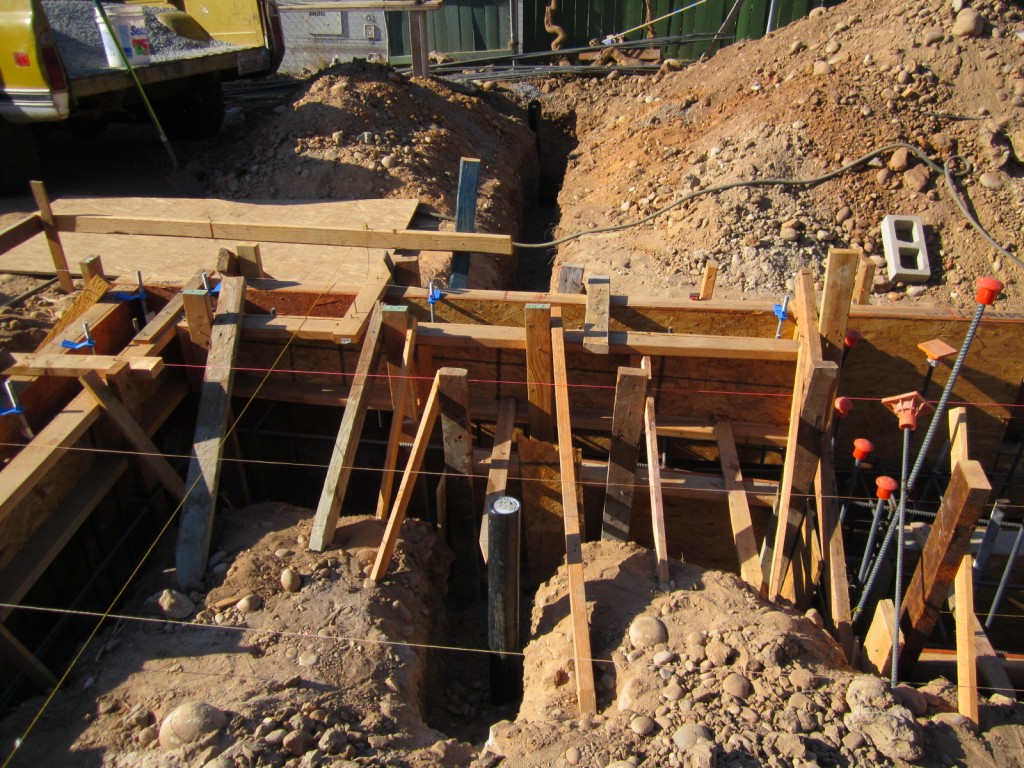
So you are probably wondering why I started working on the foundation before I had stamps, in theory you are not suppose to, but I felt confident enough after seeing the first request for changes that there were no gray areas with the City with regards to the footprint, setbacks or structural. After all, we only dug trenches and made forms but you’re really not suppose to start. I gained 3 weeks by taking the chance but was nervous the whole time someone would complain.
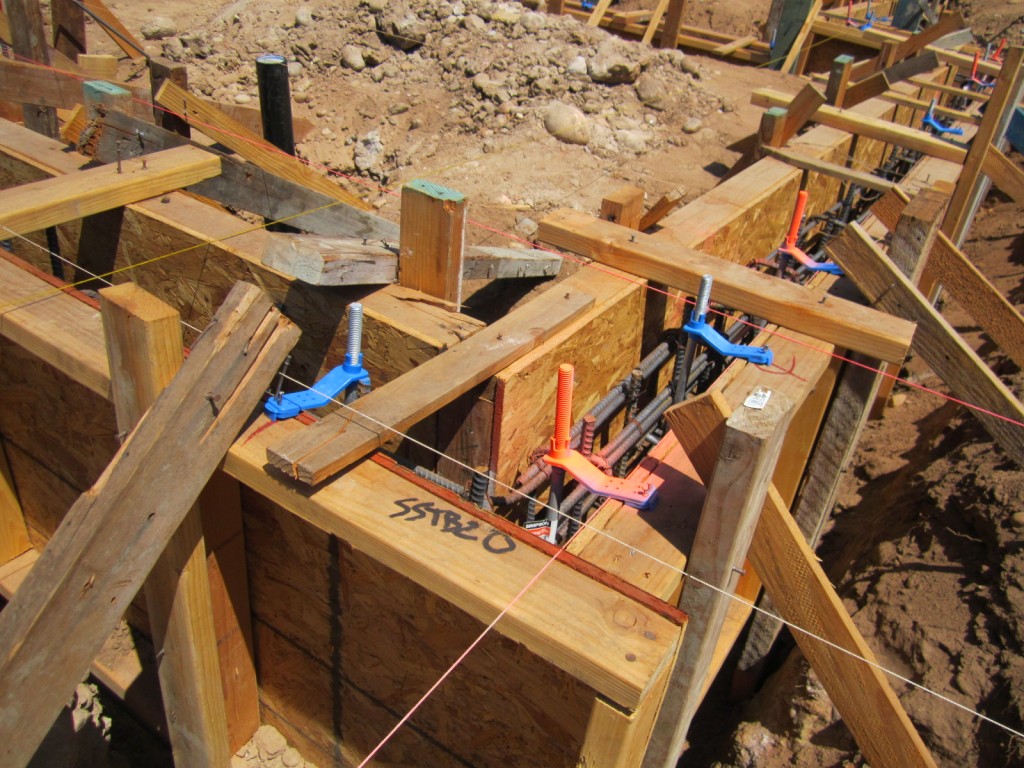
I had 2 inspections this week, the first was for the plumbing underground, this is the sewer lateral that brings 2 waste lines into the structure. You have to run the ABS through the footing, sleeve-ing and wrapping it. The trenches were dug and I laid the waste lines in pea gravel.
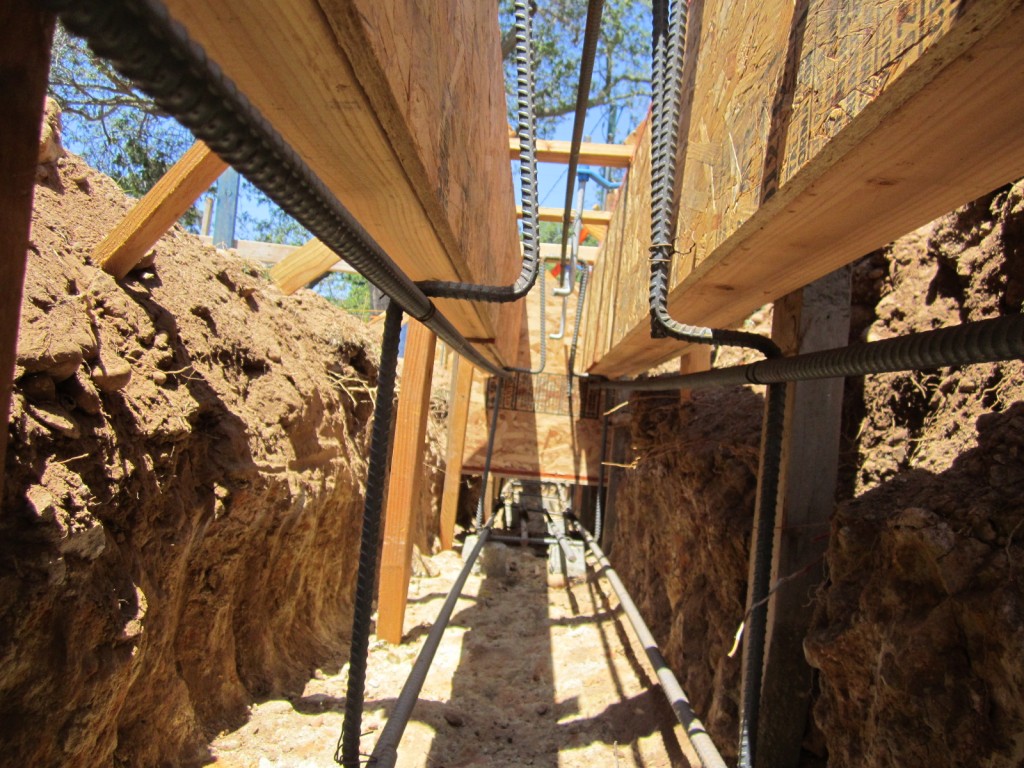
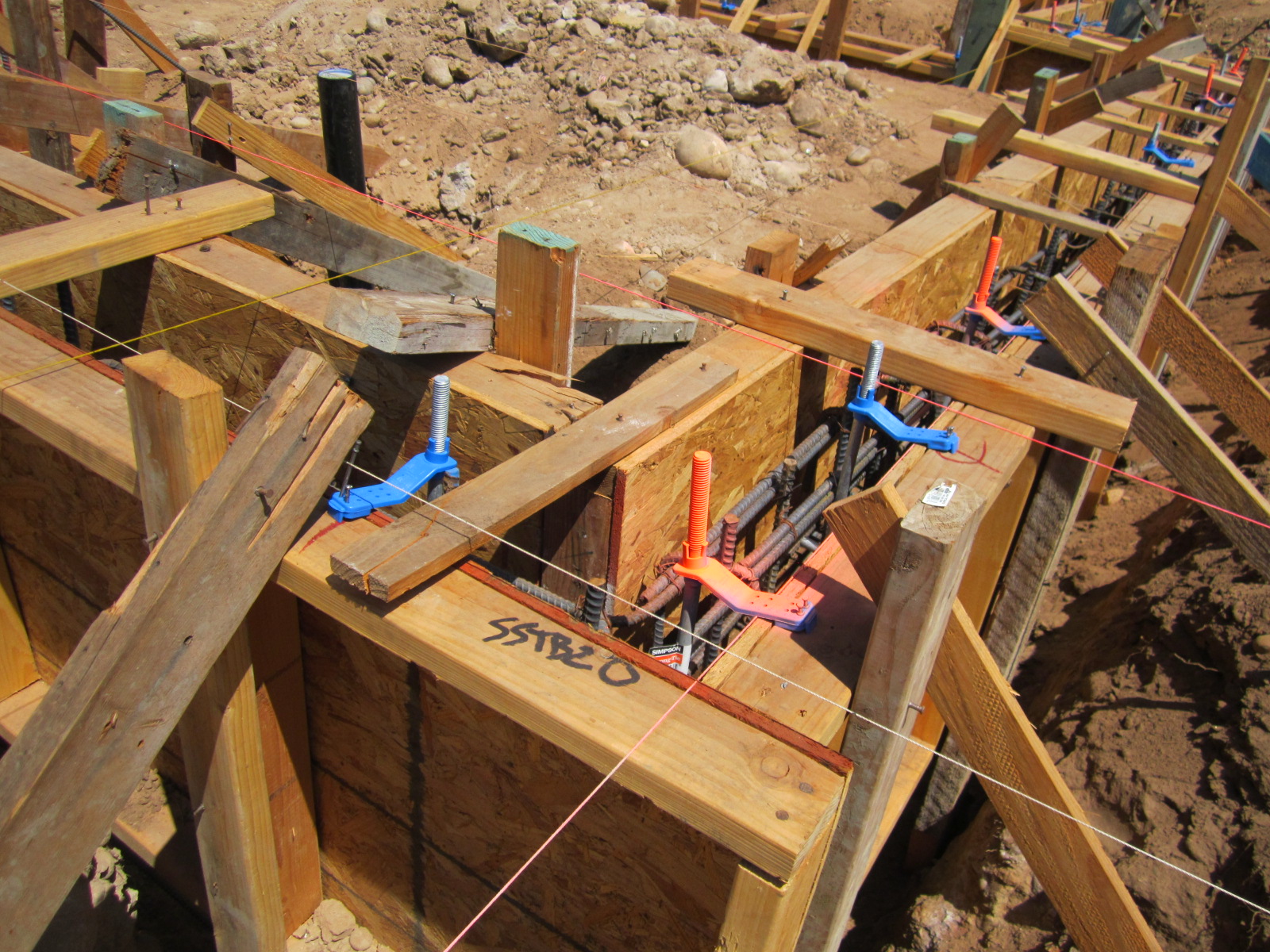
The big inspection was the foundation footing inspection, I passed it today. The inspector verified that all rebar placement and sizing is per plans and that the important Simpson hold down hardware is the right size and in the right location. We used 4,040 linear feet of rebar for this foundation. Rebar and wood forming materials came to around $4,500.00. I’m all clear now for the first concrete pour for the footings and stem wall, I have 30+ yards of 3000 psi 3/4″ “big rock” coming tomorrow so we are officially off to the races!
by Tom | Jun 30, 2012 | Foundations, South Park Modern Bungalow
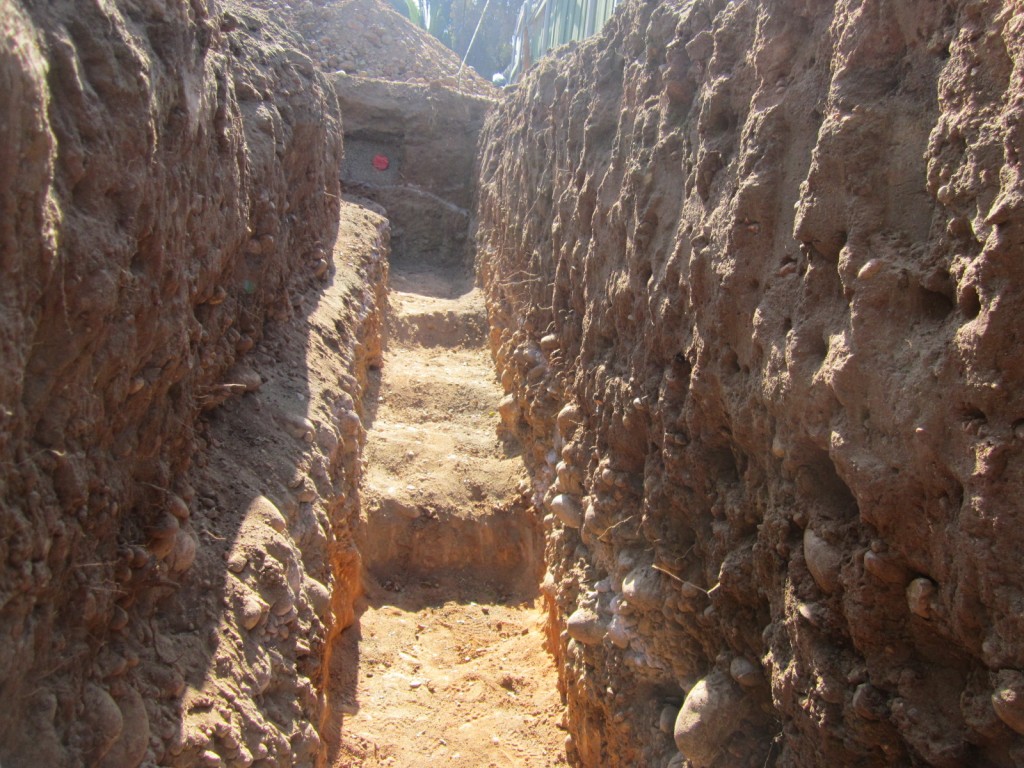
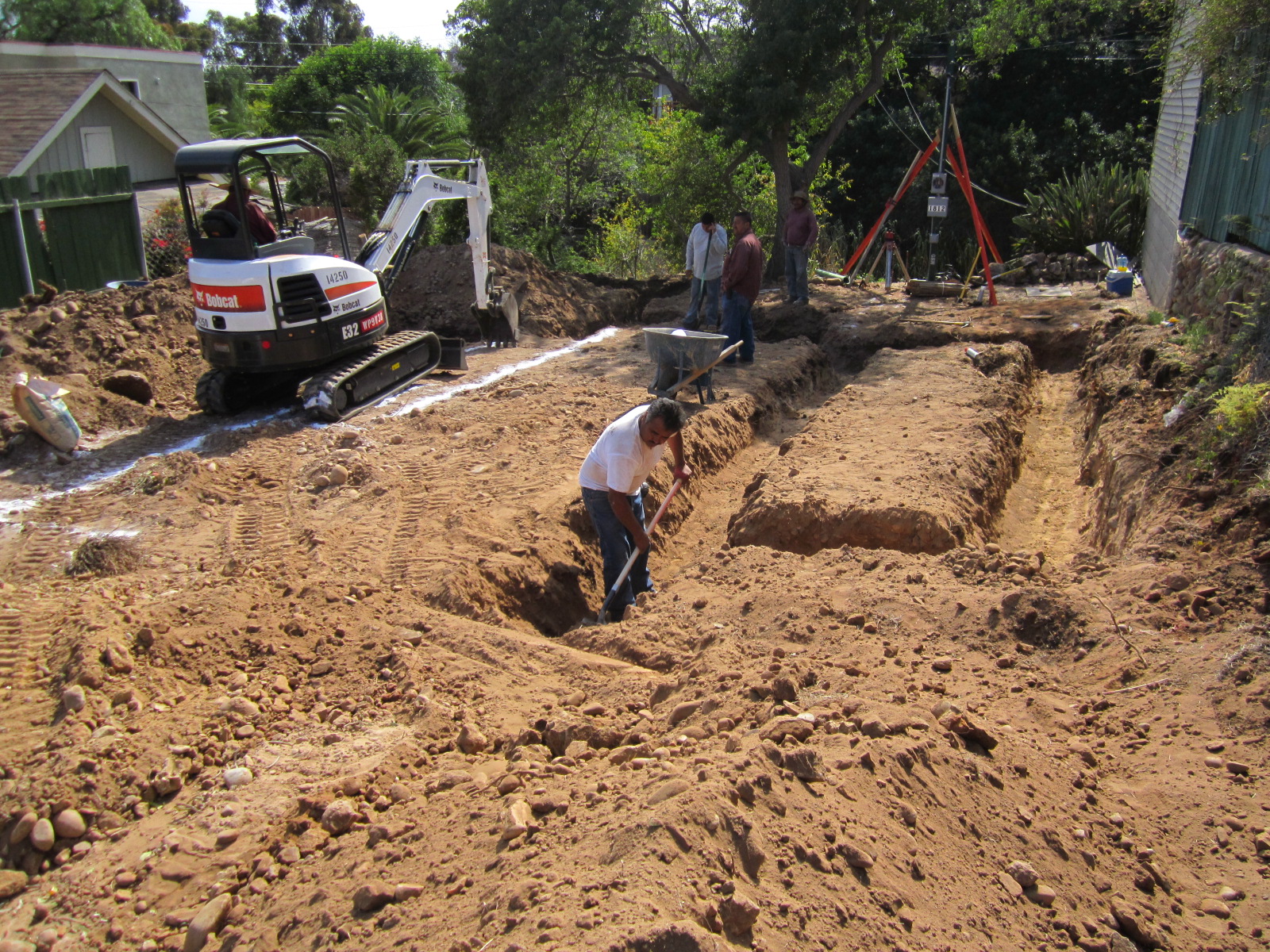
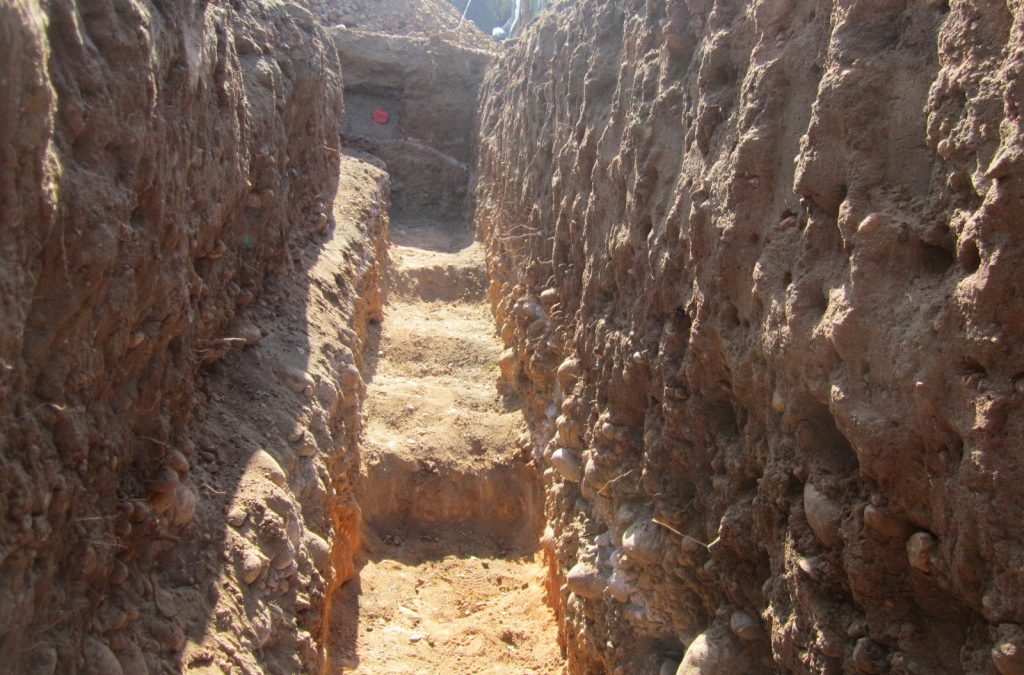
While the City of San Diego only requires footings for a 2 story house to be 18 inches deep, went close to 5 feet in some spots. You can see here that the bottom of all my trenches remain level with steps, so gravity doesn’t take our house down the canyon. The reason the footing trenches vary in depth is due to the distance to reach native soils. No lot is perfect, in our case with this house one main challenge besides having the rear 30% unusable due to the canyon is unstable fill that’s been there for years. The only alternative to digging all the way down to native soils would be to have the whole site compacted to 90%. I could have done a slab on grade at that point but at the end of the day I felt this way will be the most structurally sound. While these deep footings will eat up expensive concrete at $95/yard, a slab on grade foundation would still need deepened grade beams and since the lot slopes down towards the back, the foundation is 3 feet high and end up being about the same amount of concrete. Note the existing 4″ sewer lateral ready to go.
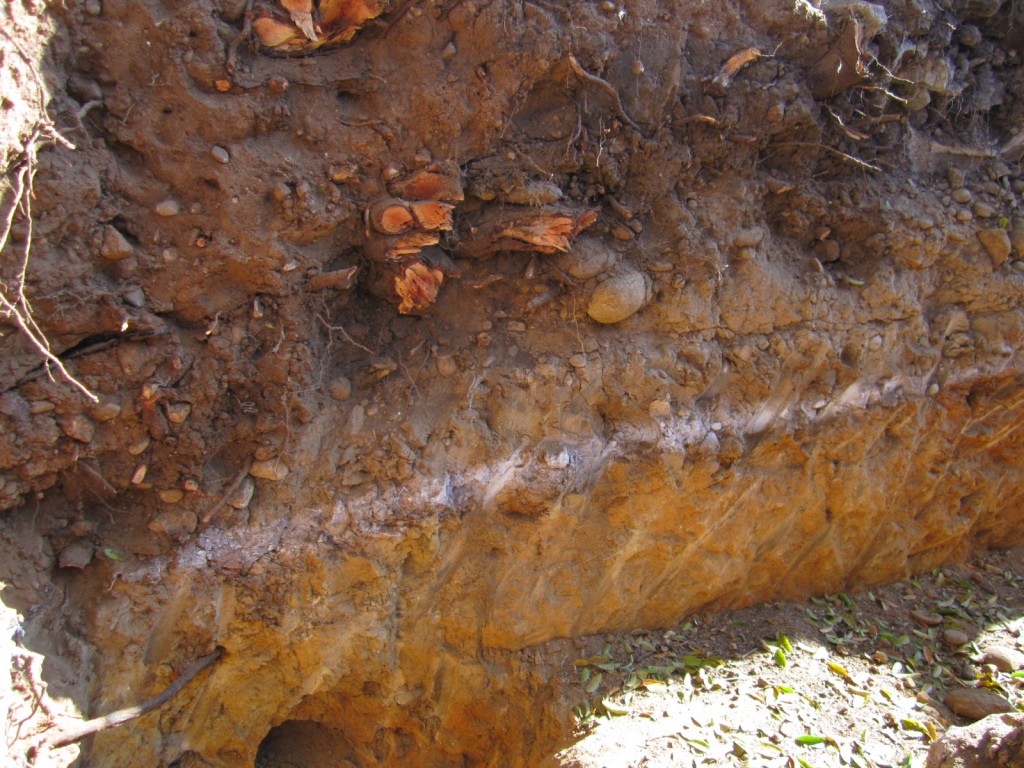
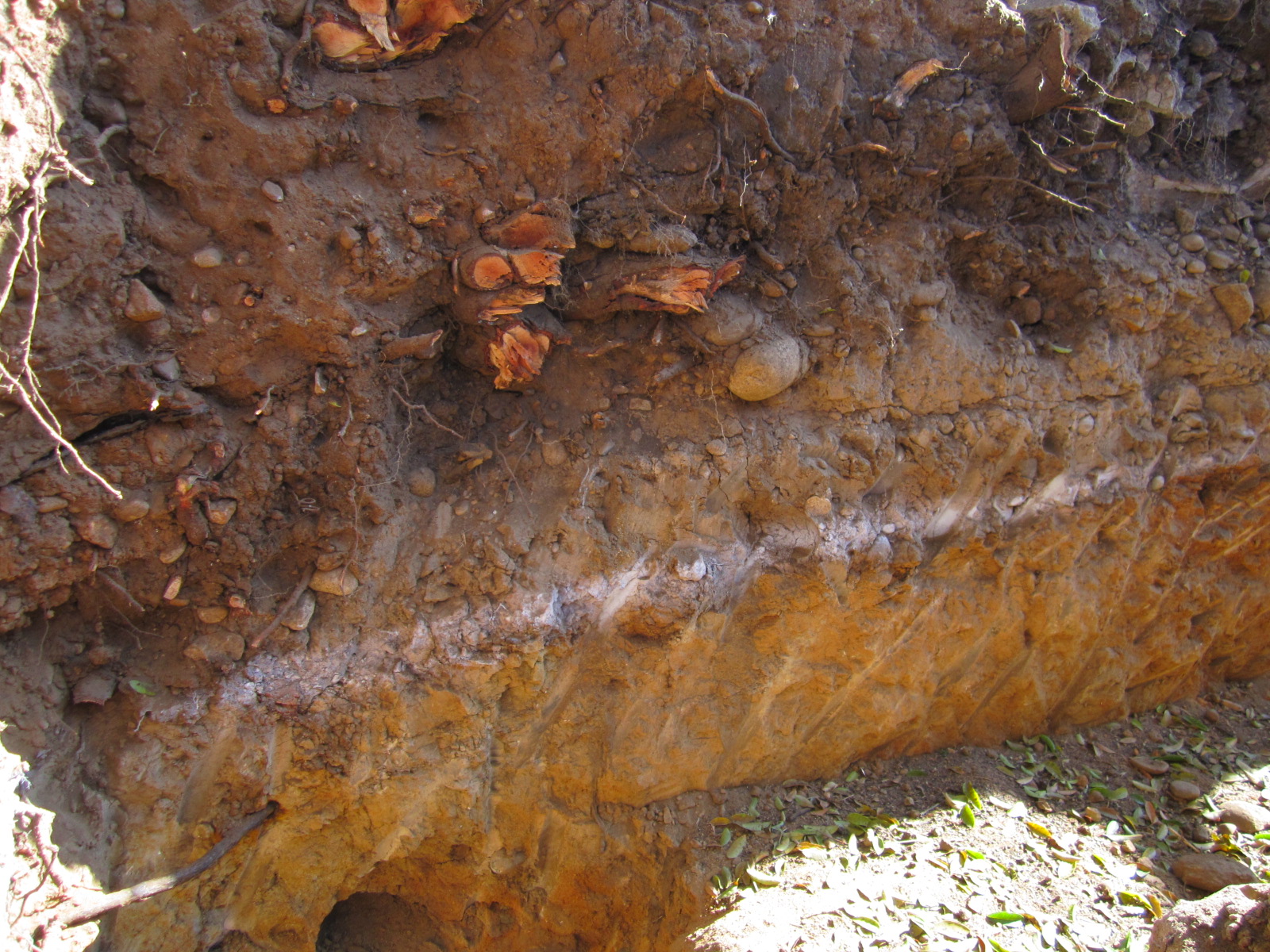
The excavator we rented made quick work of the foundation dig but after the soils engineer came and inspected our footing trenching, he requested us to go farther into the native soils. You can easily see here where the brown, silty cobble fill changes to a rock hard gold color at my spray paint line. This stuff is so hard to dig we used a jackhammer for 3 days to deepen the trenches to satisfy the soils engineer. He’ll now give me a certificate which I’ll hand to the City inspector when he comes to inspect the foundation forms and rebar placement. As previously mentioned, you could roll the dice and not have a soils test but if the City inspector feels there is fill he’ll make you take all the forms apart and get the report anyway. I want to build it right so in my mind this is the only way to do it.
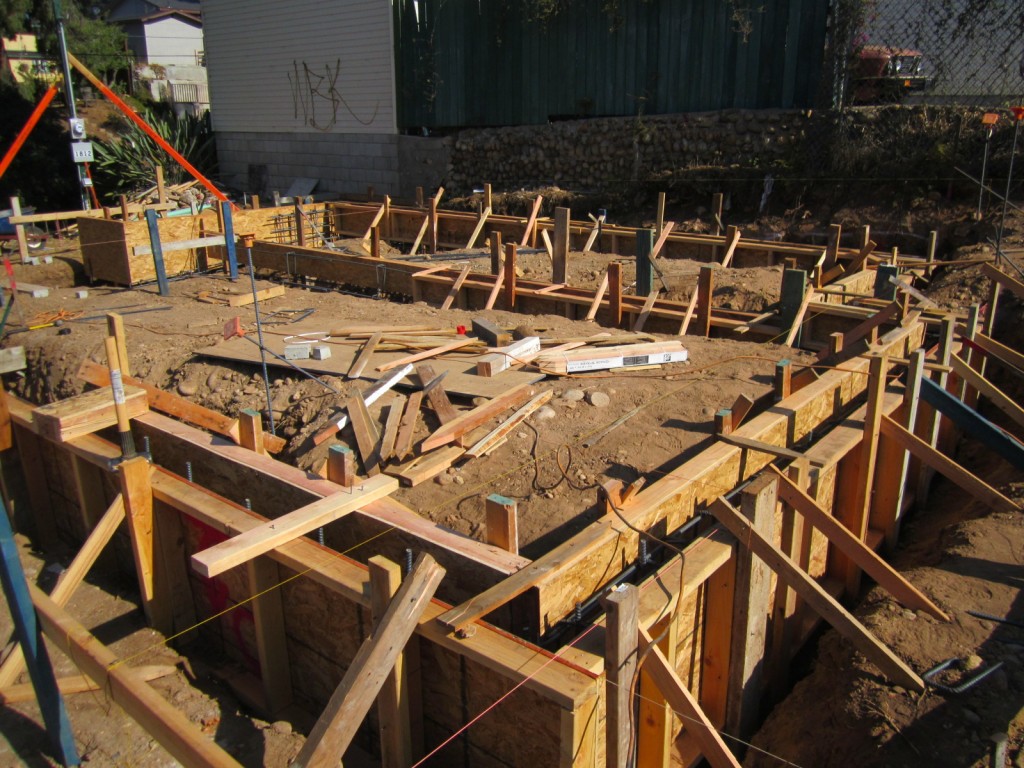
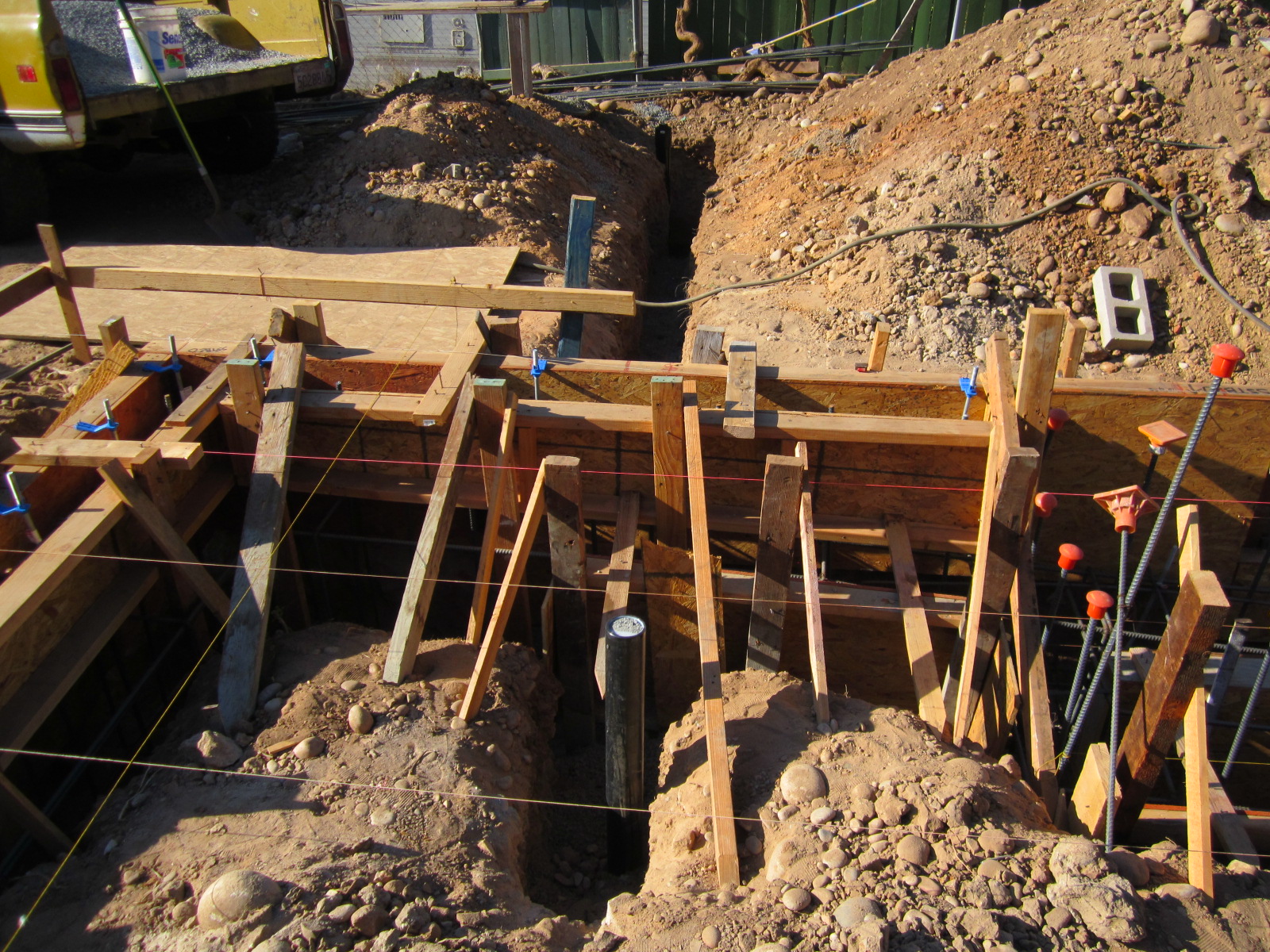
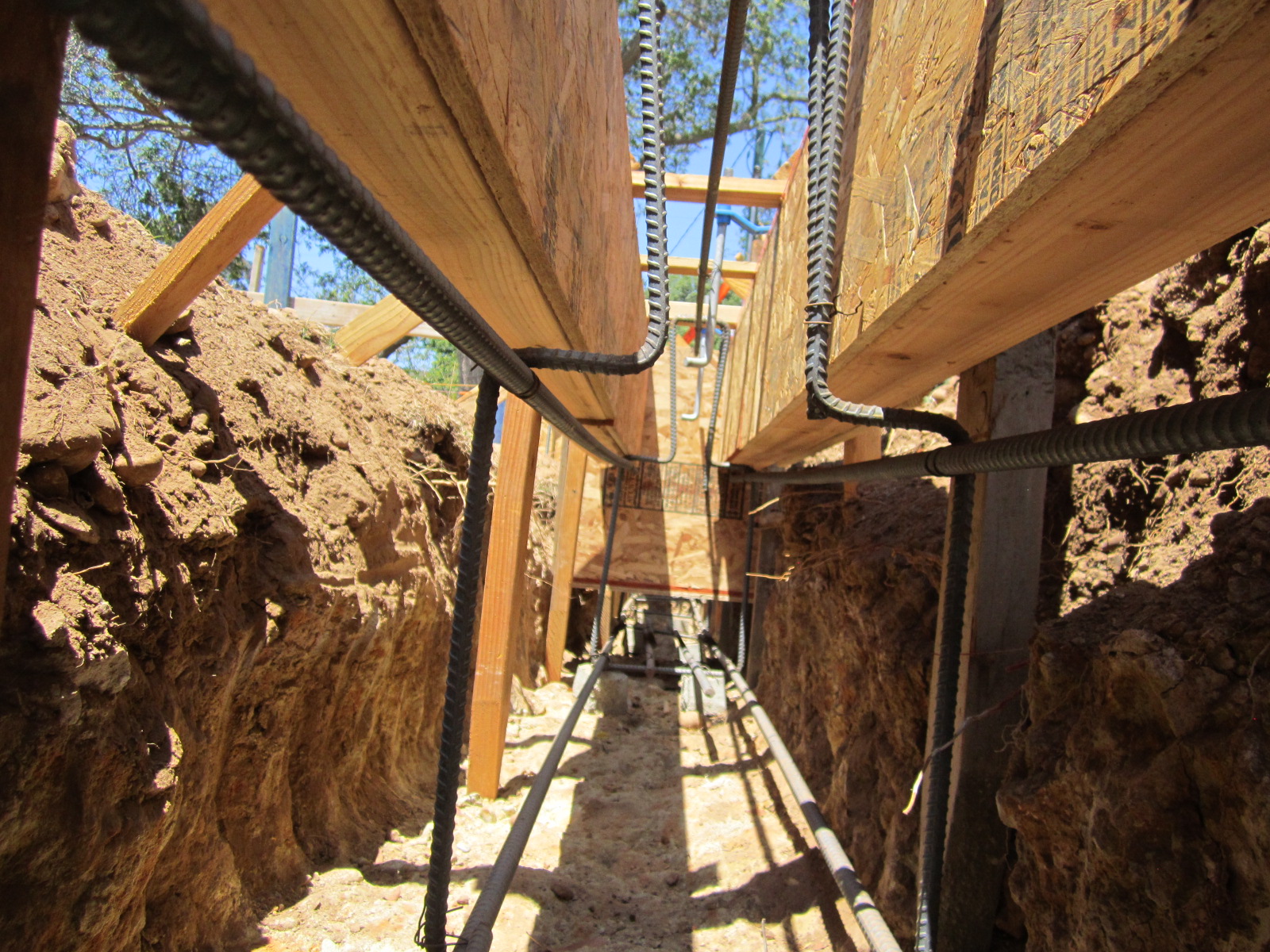
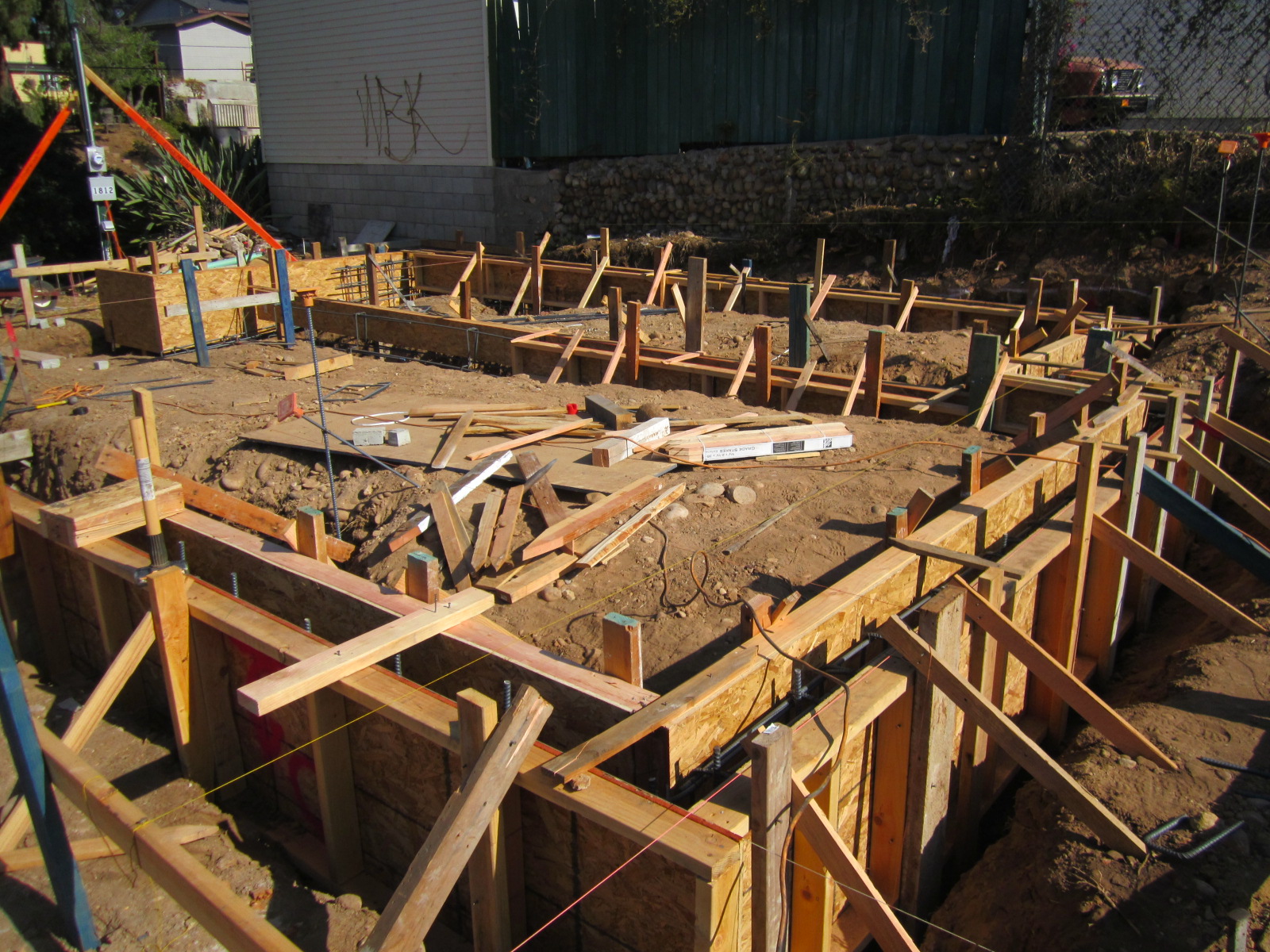
The first step in forming a raised foundation is pulling some control lines from which you can set your exterior forms. We build them all with 2×4’s and OSB, setting the outside of the house footprint first and then starting with hanging the rebar inside. All rebar has to be 3″ away from dirt or forms. Finally after cleaning out and debris that might have fallen into the trenches you then set the inside form. After inspection we’ll pump concrete in from the top.
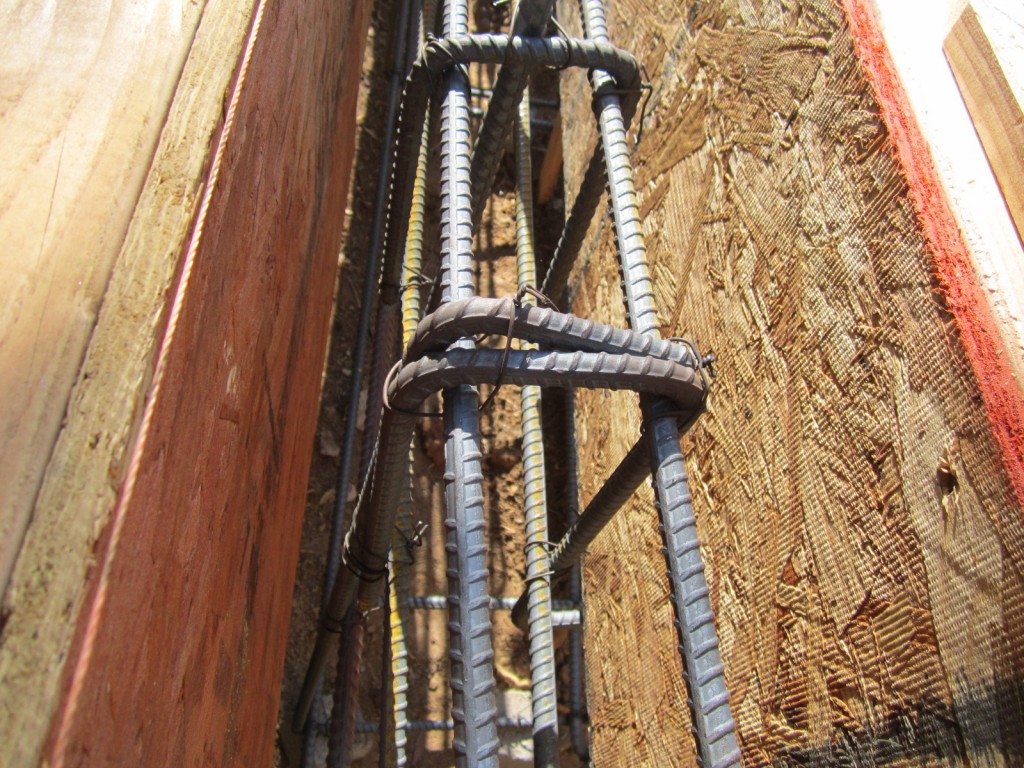
Once again the City only calls for (4) 1/2″ horizontal rebar inside the foundation with vertical bars 24″ on center. For just a little extra cost I upped the ante to (6) horizontal 5/8″ bars with verticals 16″ on center. Raised foundation houses in California have this exterior stem wall. In the interior of the foot print the load is typically carried by4x6 treated sills that the floor joists rest on. These beams usually sit on posts and piers. My raised foundation design is far superior with one more stem wall running down the middle of the house like a spine. I’ll be using TJI floor joists which will span the whole width of the house without any posts and piers. We’ve fixed so many foundations on old pier and beam bungalows, with this method you’ll also have the convenience of a wide open crawl space to run mechanicals without any posts in the way. A little extra cost but by far a superior design for a raised foundation. Most of the neighbors have stopped by now, its the talk of the street that something is going up on “old man Fred’s” lot. I’ve been extremely respectful to everyone, even buying car washes for neighbors whose cars got dusted out by all the digging. I also rented a construction fence with privacy mesh so no one has to look at the mess all summer. We should be done with the forms mid week and then we’ll get started with the underground plumbing that needs to go in before we pour concrete. Stay tuned, once I get past the undergrounds and pumping this foundation it will get framed up real quick.
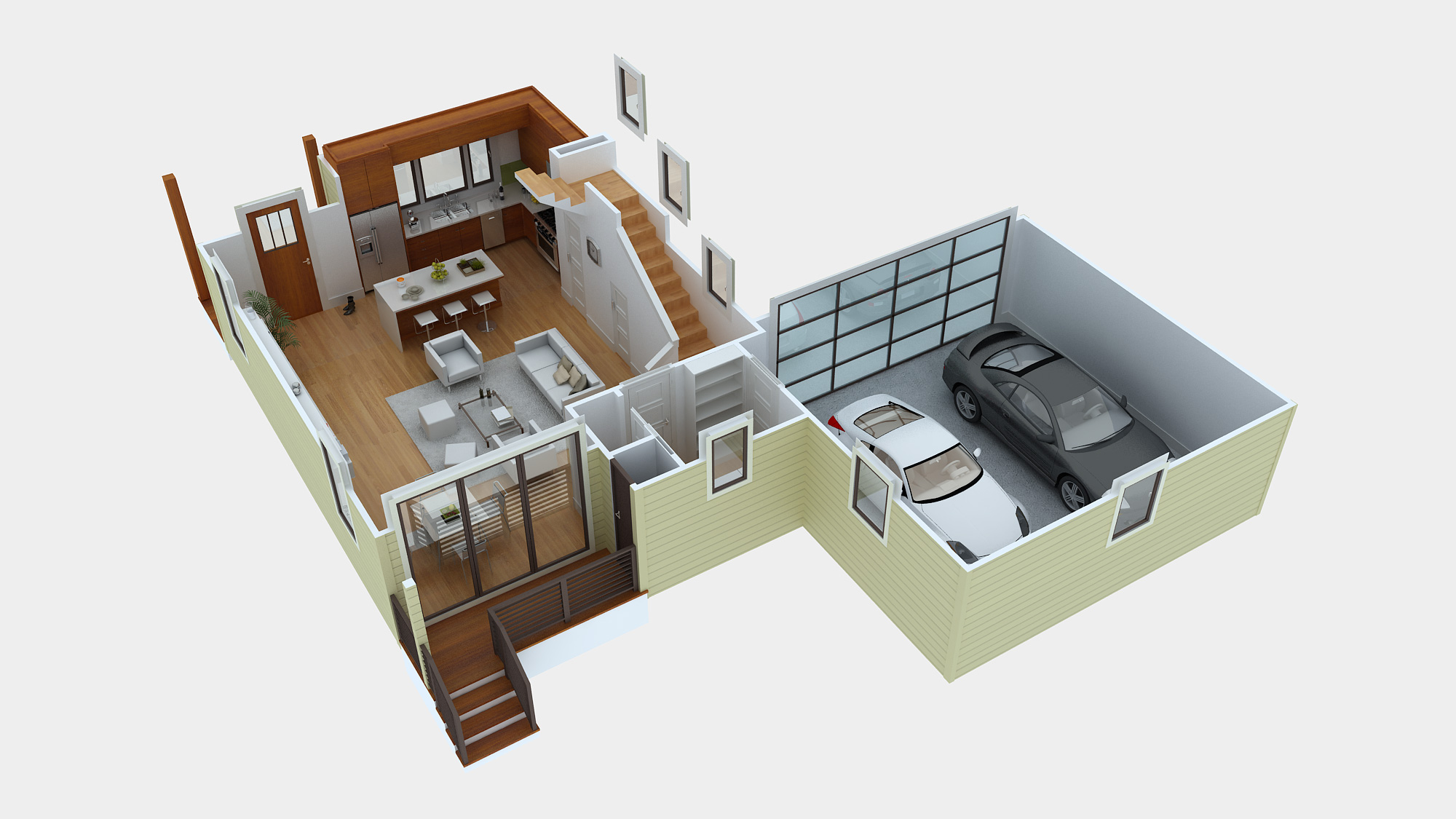
by Tom | Jun 21, 2012 | Floorplans, South Park Modern Bungalow
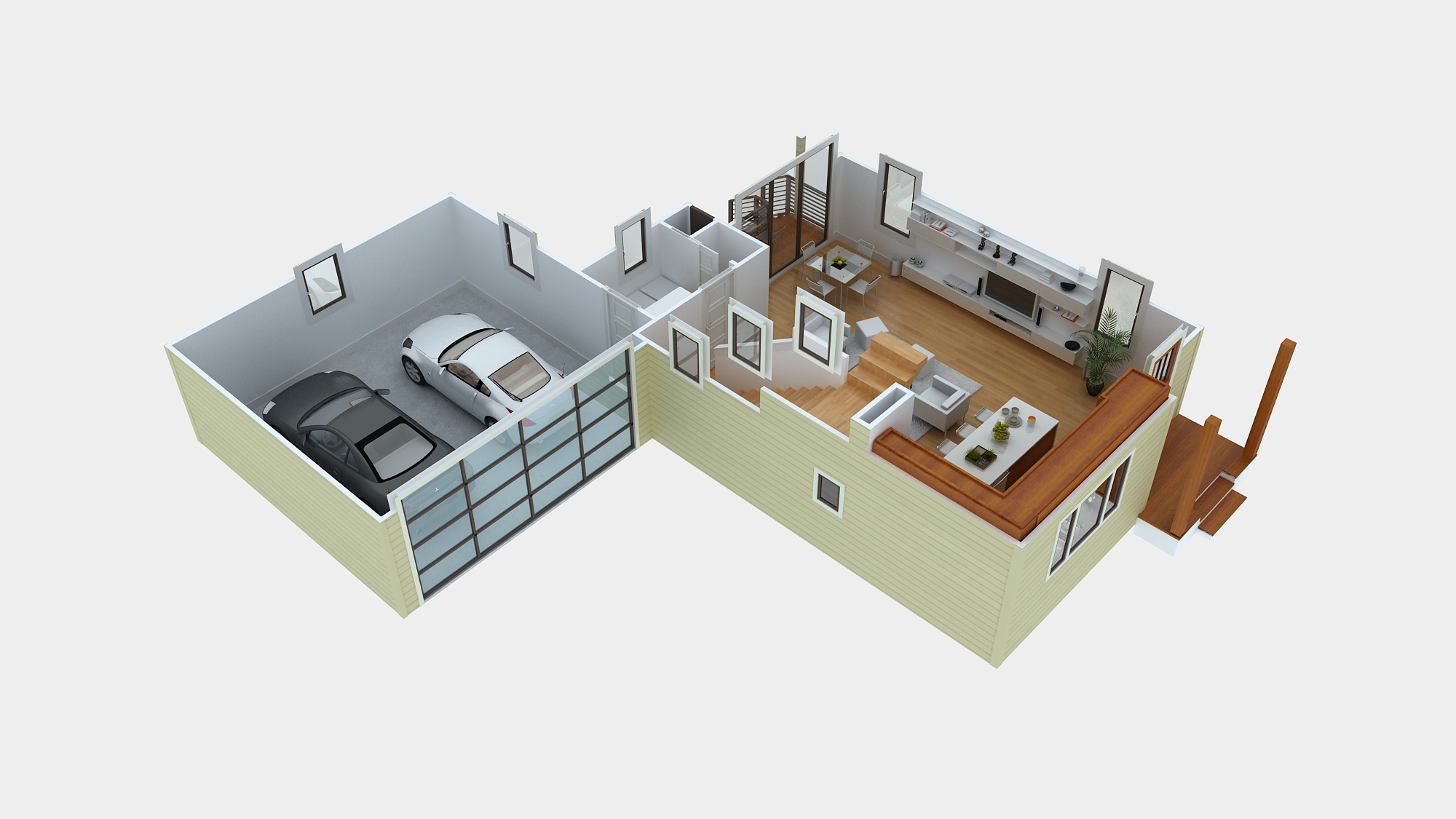
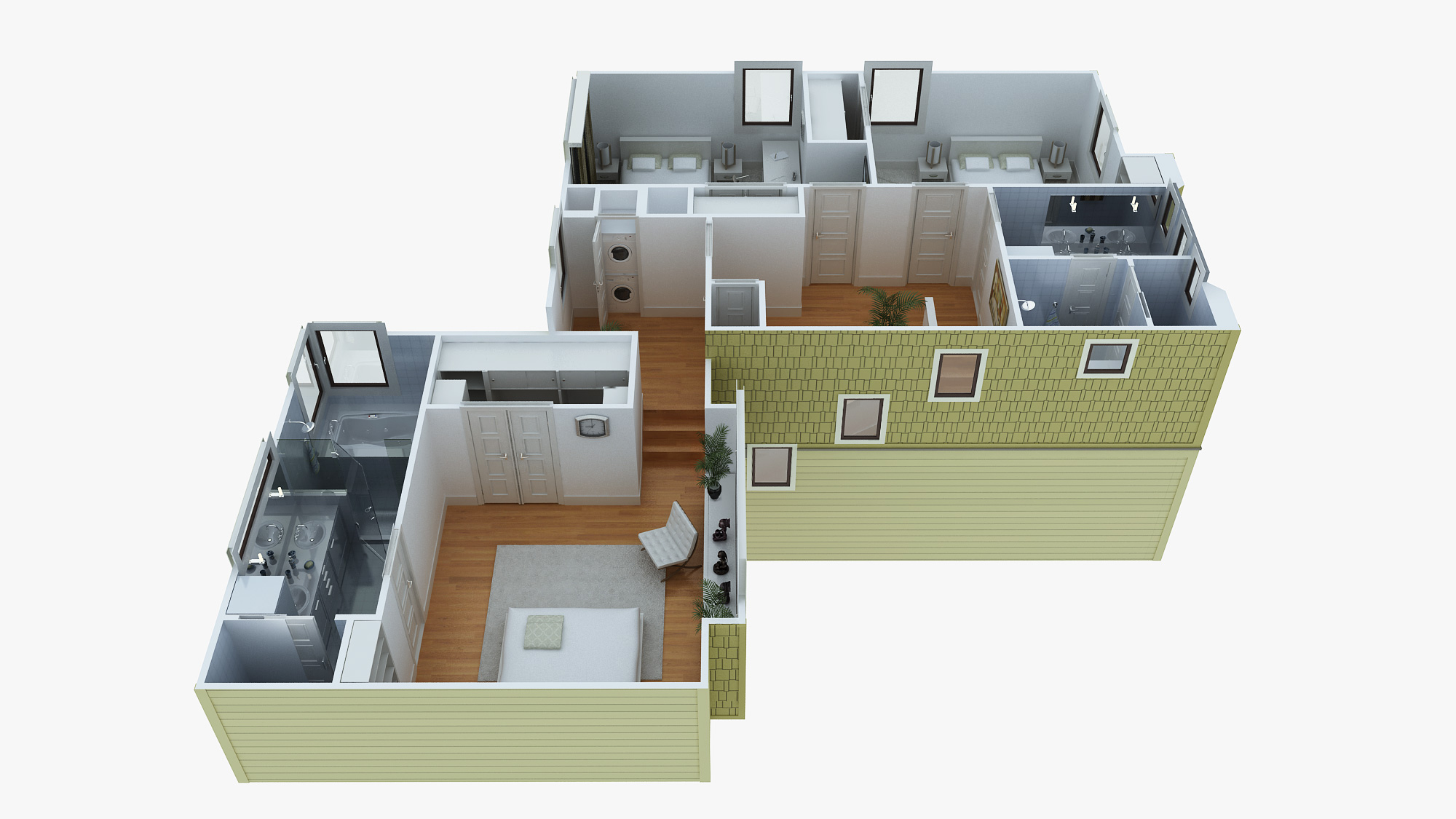
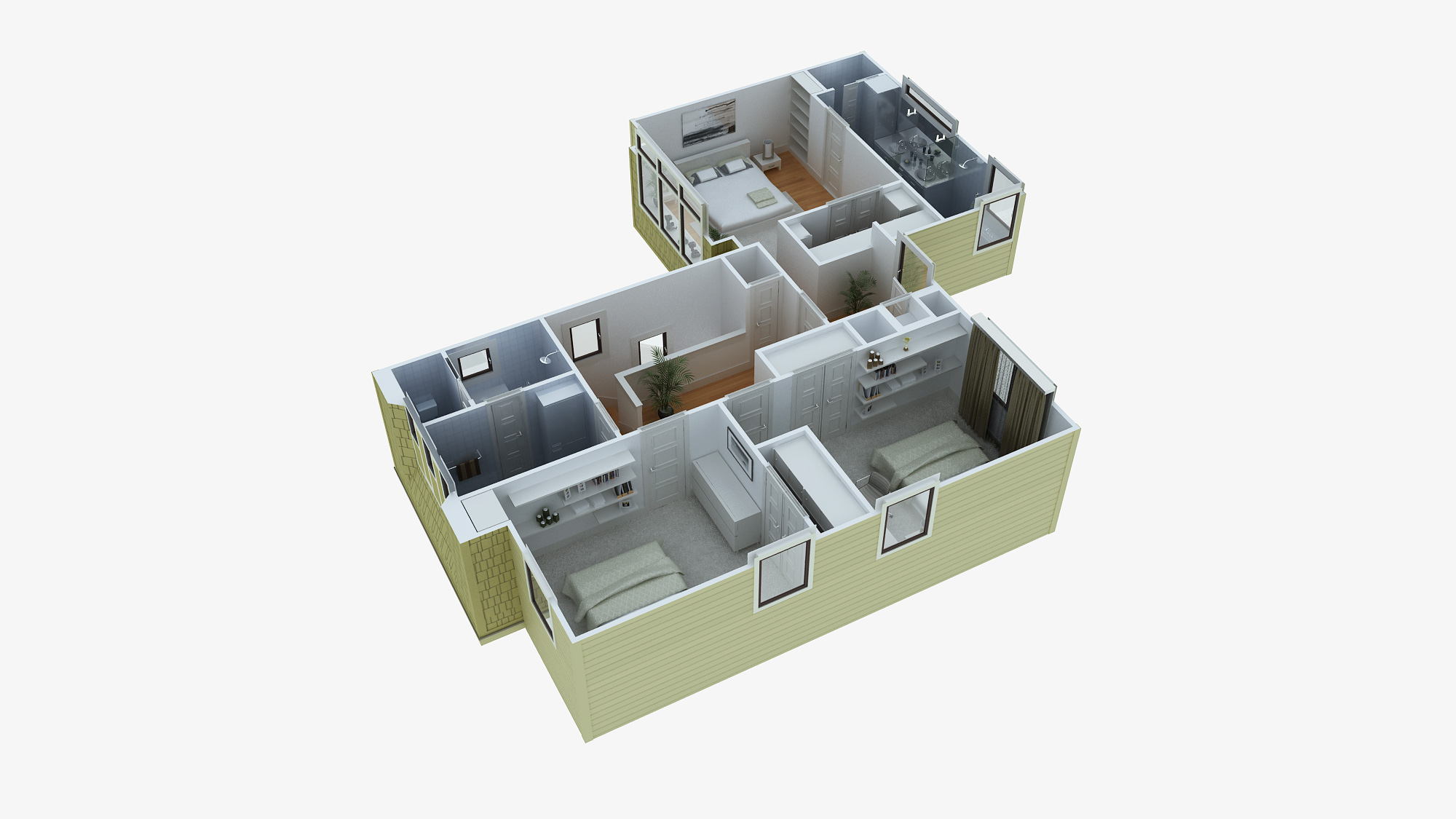
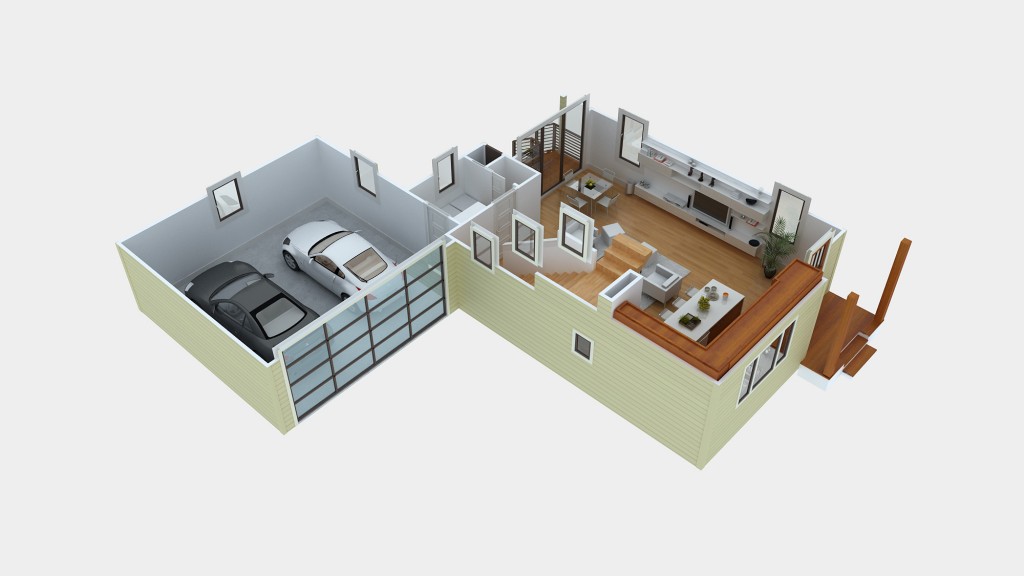
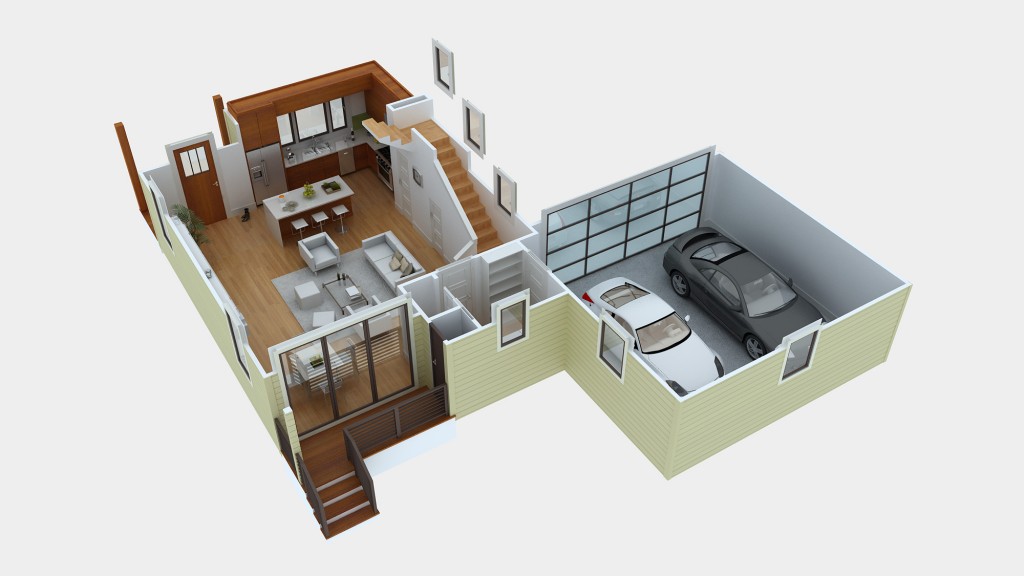
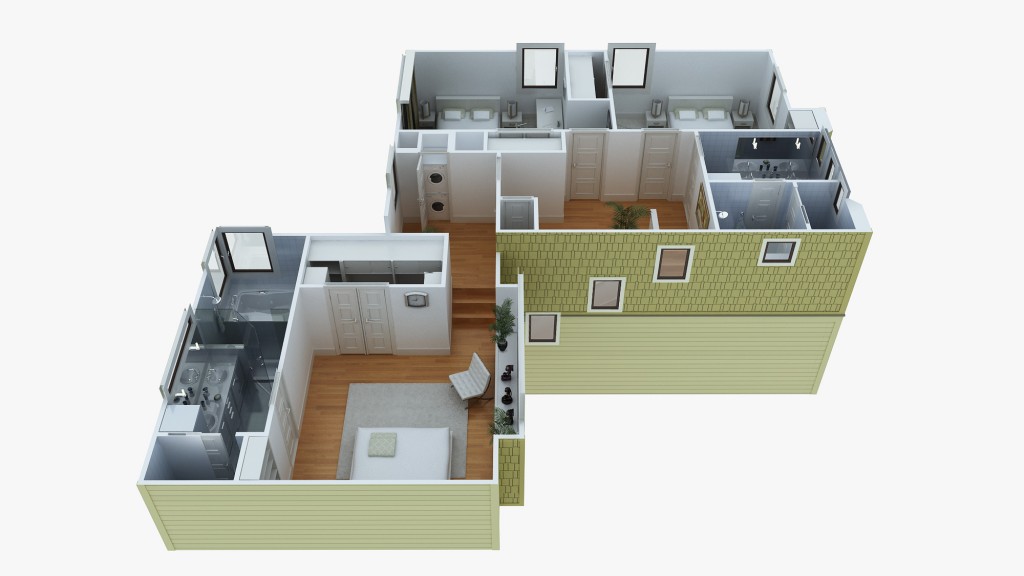
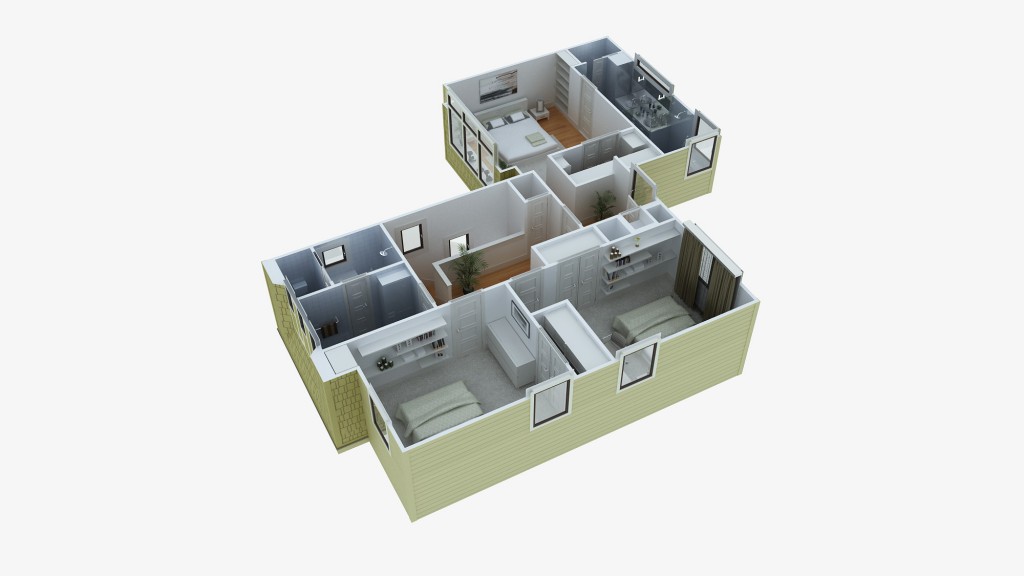
Here’s my South Park floor plans modeled in 3D. Make sure and click on the pics to zoom in and take a look around, make yourself at home! This custom house is being built in the San Diego neighborhood of South Park by Green Button Homes. Nothing like this has been done in the area, we are San Diego’s cutting edge design/build general contractor!
by Tom | Jun 16, 2012 | Foundations, South Park Modern Bungalow
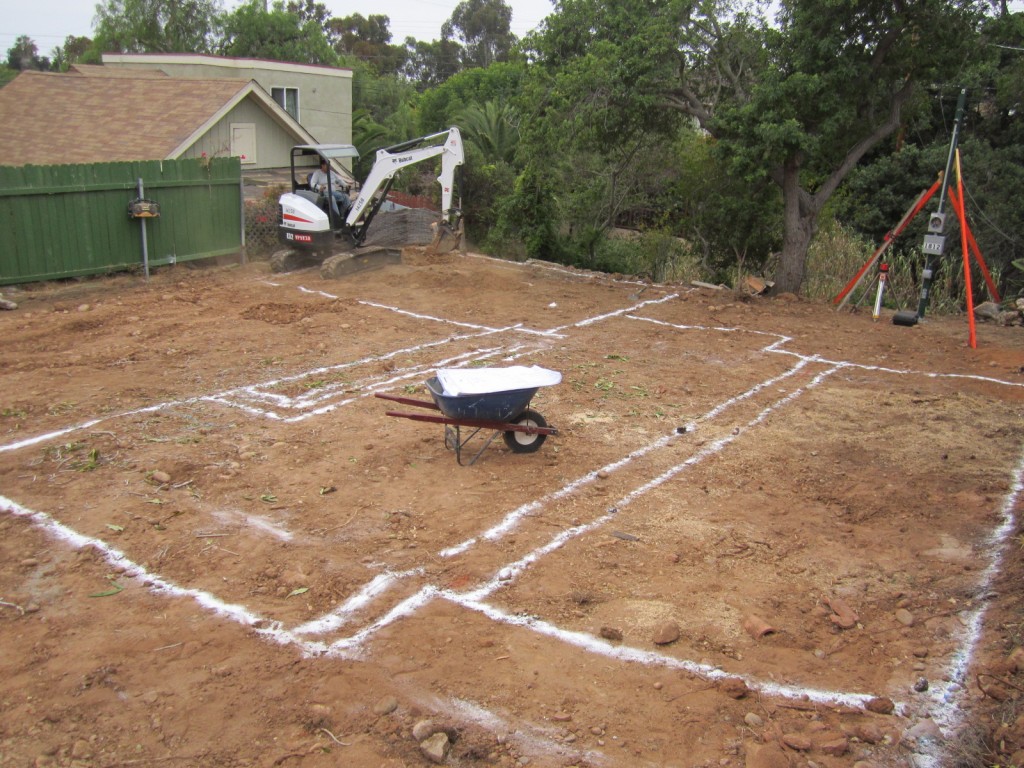
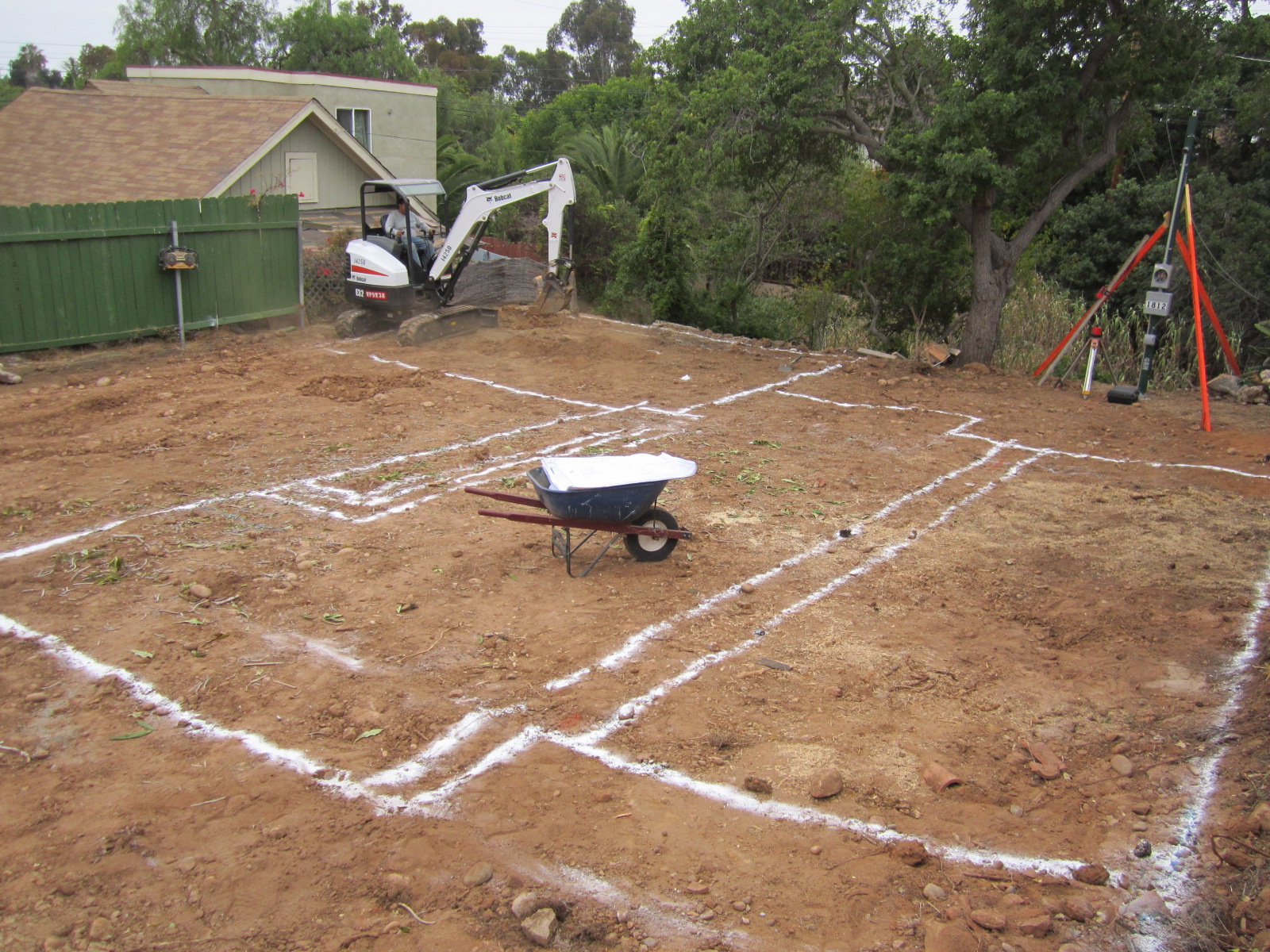
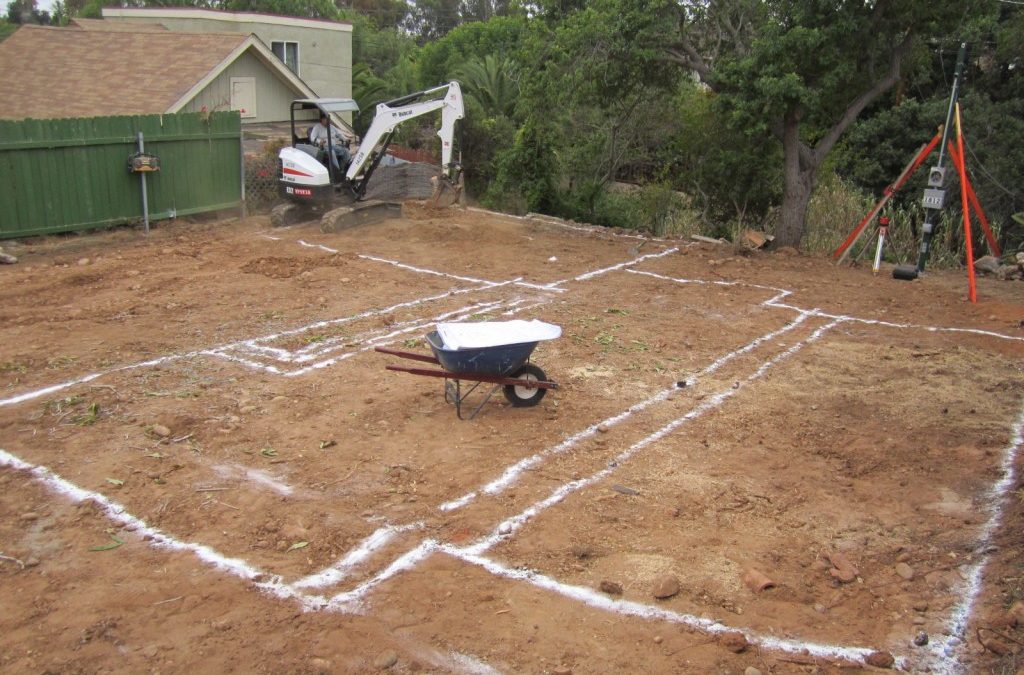
I have officially broke ground in South Park. This is not a big house but its really crazy to see it marked off on the lot and try and picture walking through it, it looks very small. First order of business was a light Bobcat grading of the lot and setting a Temporary Power Pole which has to first be inspected by the City and then hooked up by SDG&E.
Did you know that all new single family construction in San Diego now require fire sprinklers?, doesn’t matter if you are right on the beach without a tree in sight. Not a big deal after all, I found a licensed sub contractor who will install everything at the rough-in stage for $2100.
There is a 30′ height restriction in our zone but that doesn’t mean you can be 30′ high at the front of your house. If you draw an imaginary line at the 15′ front setback point and then go up 25′ and create a 45 degree angle back to the 30′ height, this is the envelope you cannot cross. All bathrooms with a tub or shower also now have to have an exhaust fan with a humidistat, even if there is an opening window. CO2 detectors also now have to be upstairs as well as downstairs for current codes.
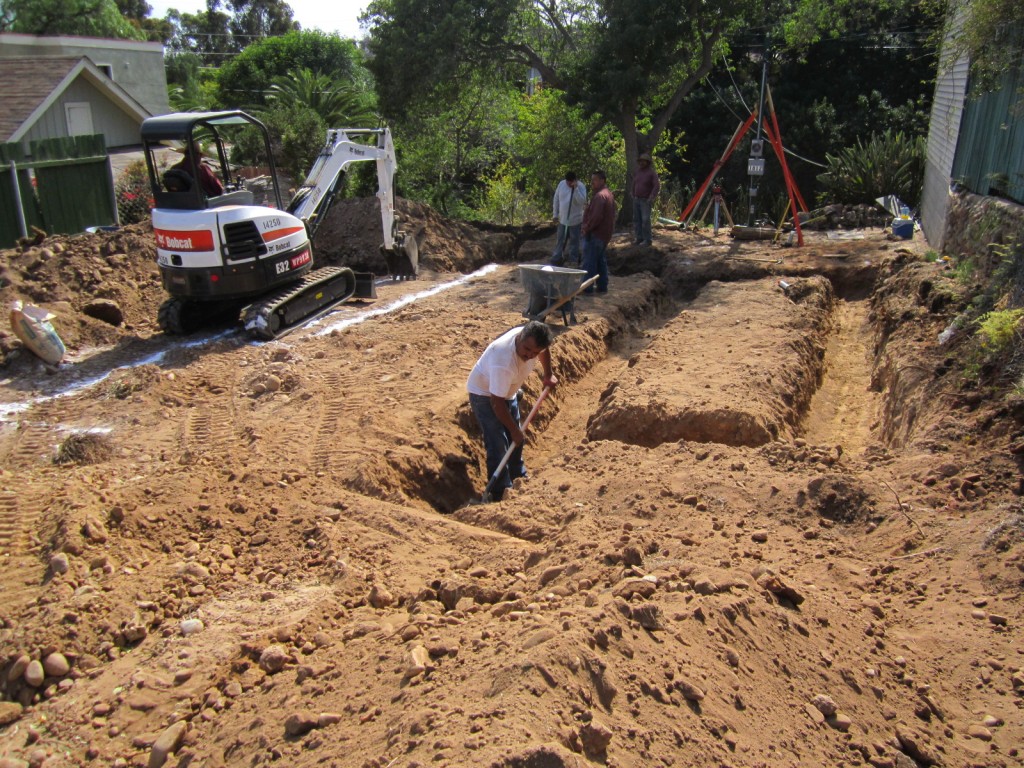
Since the house is going to be on a raised foundation, I rented a mini excavator for the day from my favorite place BJ’s and we dug all the footing trenches. I’ve never re-measured and re-squared anything in my life, its such an important step getting the house in the correct position on the lot. We had the property line markers to work from that my land surveyor installed, so we set up strings and then transferred the footing locations onto the ground.
Soil testing in San Diego is the first step of your project. A few months back I had a soils test done, they found native soil under about 1-2 feet of fill. Although the footings for a 2 story house only have to be 18″ deep, we had to dig 2-3 feet in order to reach the rock hard native soil. The soils company will now come and re-inspect the trenches before we start on the forms and sign off that its correct.
If I hadn’t done the soils testing the City could have, at their discretion, made us take apart the forms and dig the trenches deeper if they felt the soil conditions were questionable at the time of form inspection. This happened to a friend of mine last year. The soil in our area is very good, not expansive and rock hard so this house isn’t going anywhere.
Additionally, I plan on using a little more rebar that the minimum building code calls for, just for piece of mind as well. After the soils testing inspection is the critical part of form-setting which has to be perfect in order to create the level foundation from which everything will rest. Once all the forms are set and rebar in place, then the City comes and inspects it for accuracy before concrete can be poured. Its so exciting to build our own home!

by Tom | May 27, 2012 | Marketing, South Park Modern Bungalow
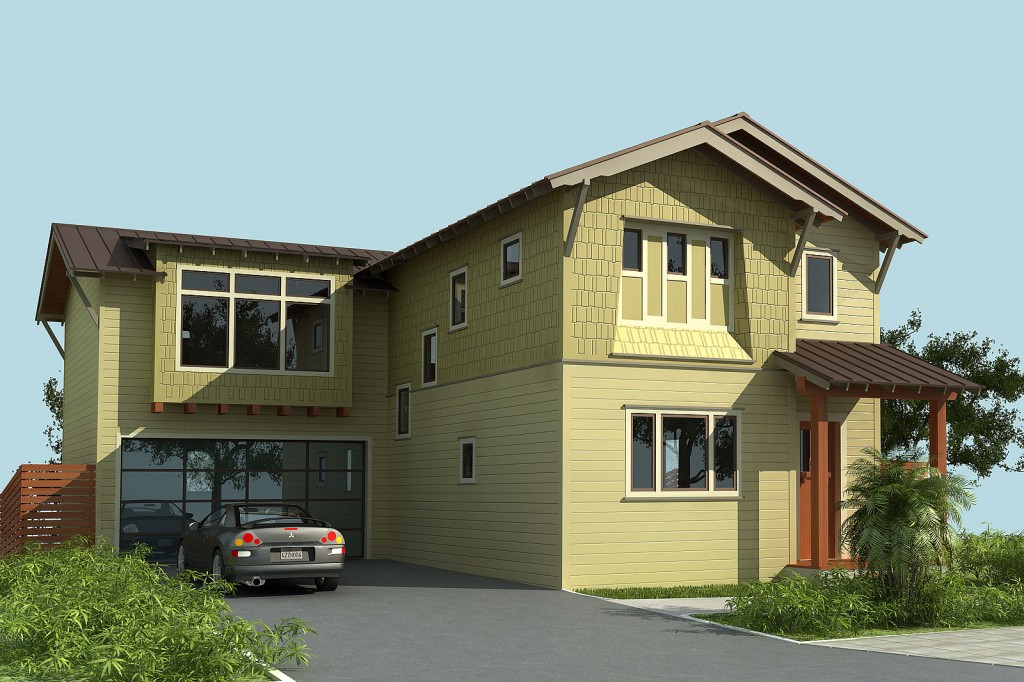
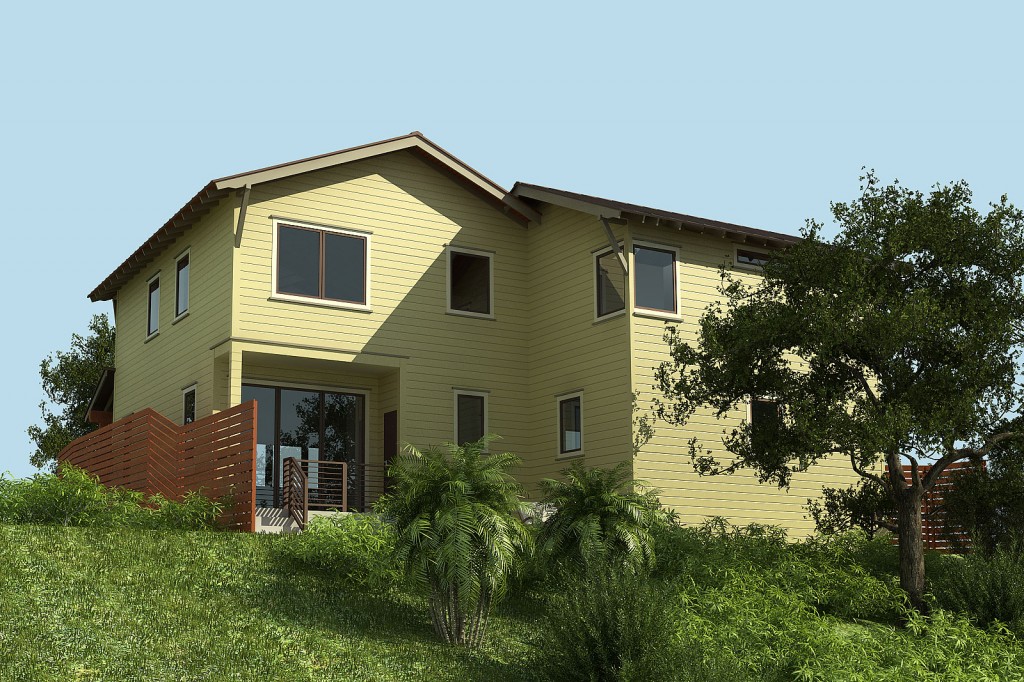
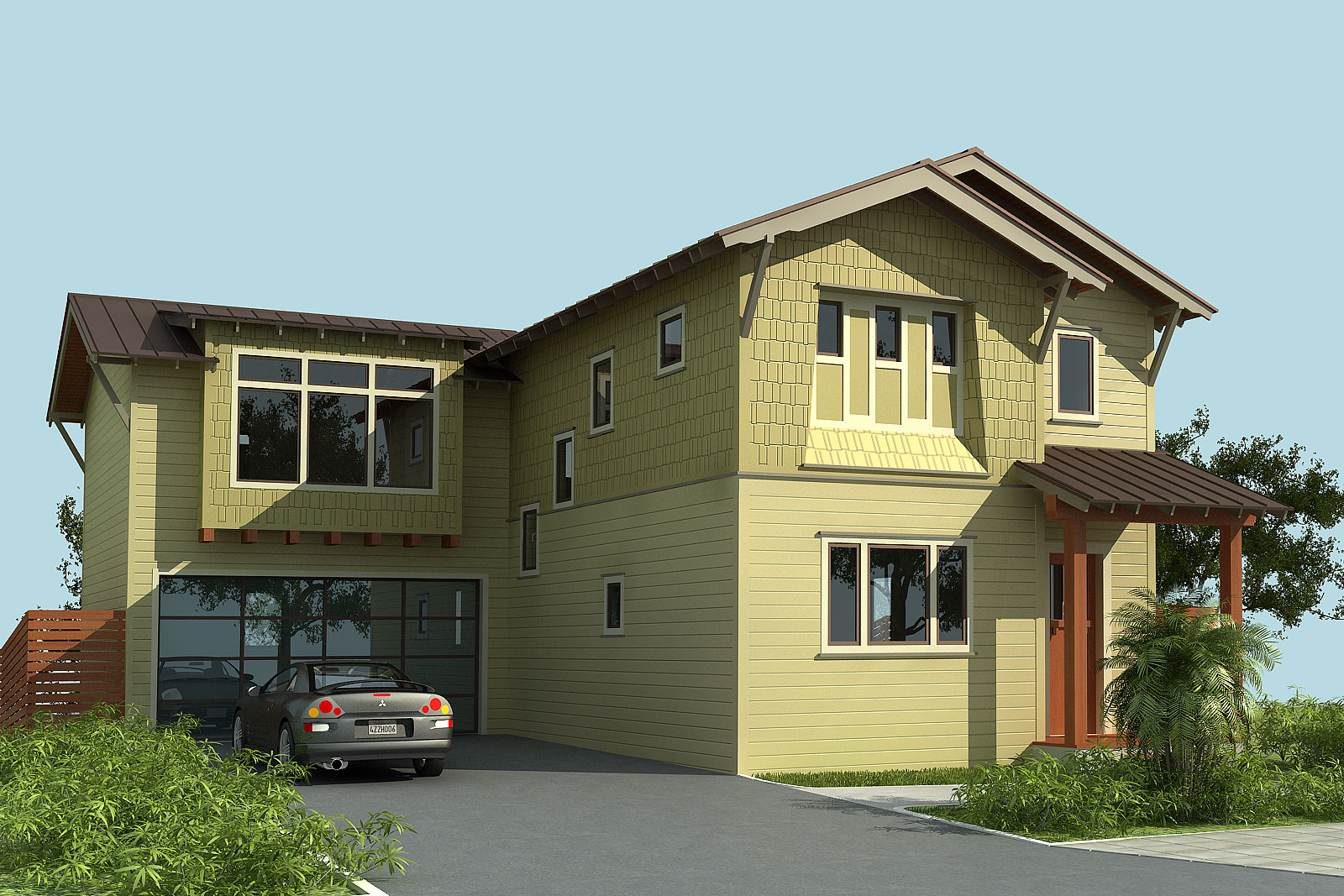
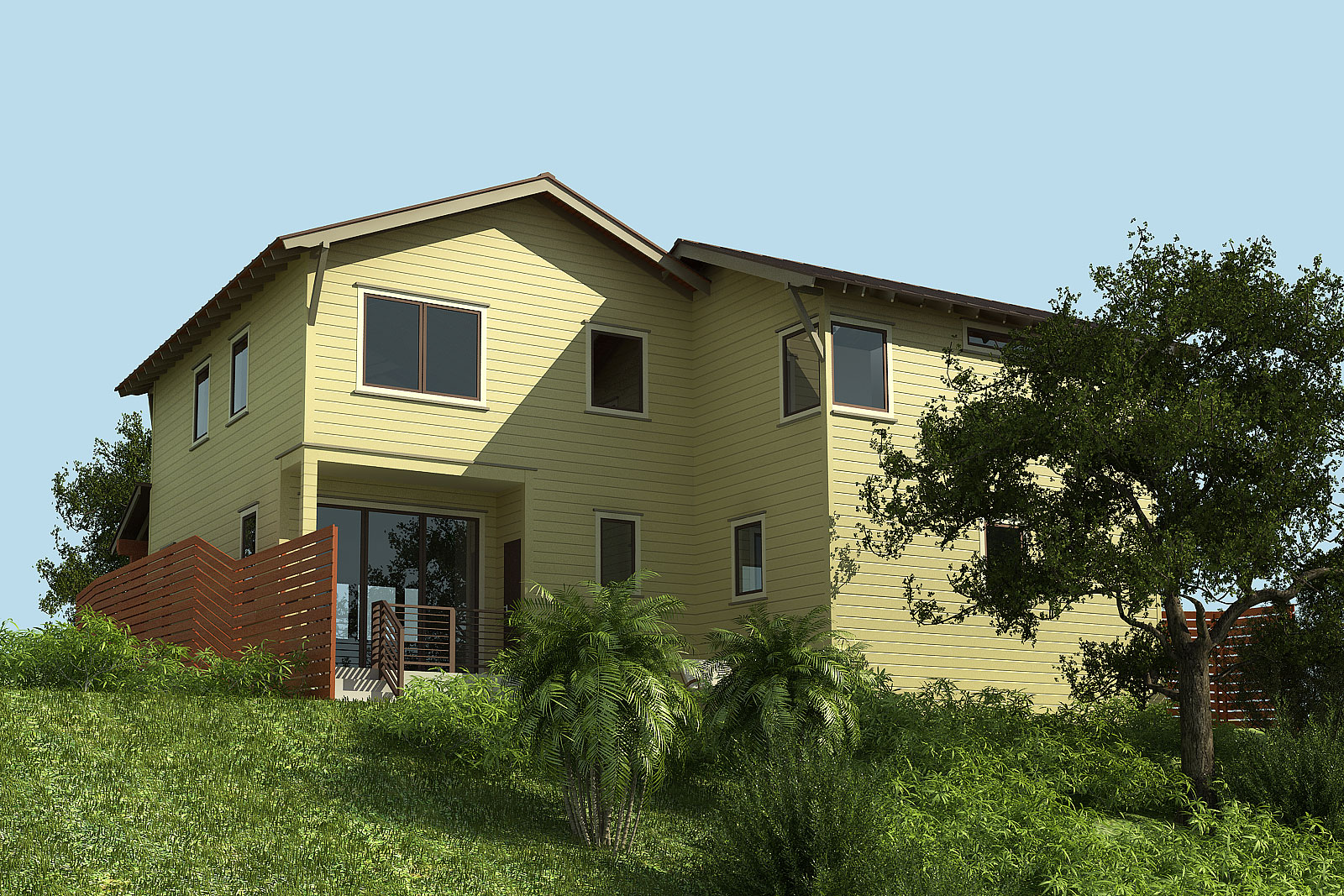
Here’s my South Park project modeled in 3Ds-Max with V-Ray. Refreshingly modern and comfortably traditional all at the same time. Exploded views of the upstairs and downstairs floor plans coming soon!